Bi-directional bindinggrass
このページは半公開の庭先公開ページです。
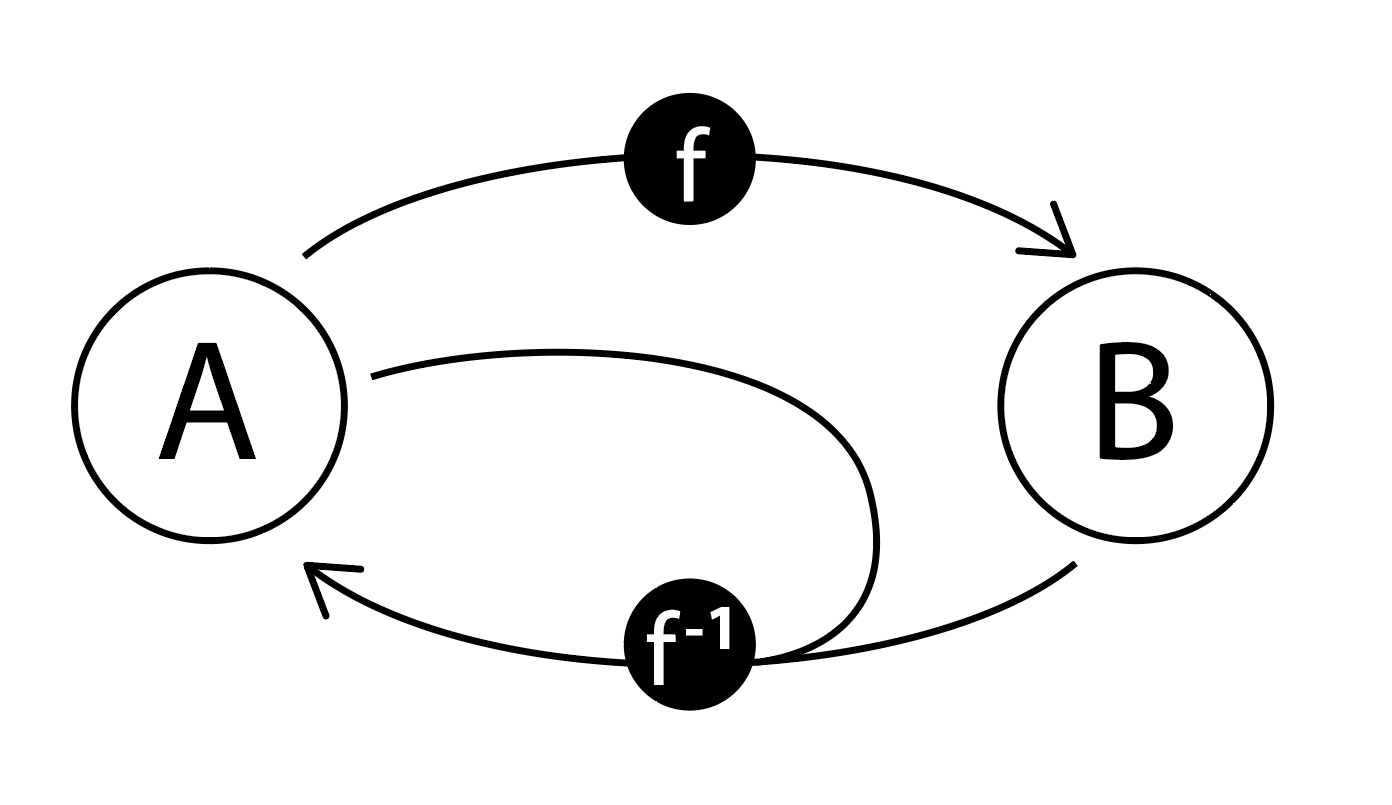
Suppose you have a value a: A, and there’s a system that reactively computes a value b: B from it. The mapping function f: A -> B isn’t necessarily bijective, so its inverse function fInv: B -> A might not be well-defined.
However, to achieve a kind of bi-directional binding, I tried to implement a mechanism like this:
type F = (a: A) => B;
type FInv = (b: B, currentA: A) => A;
That is, the inverse function is defined as a function that takes both a value b: B and the current value currentA: A, then returns a value a such that:
f(a)is as close as possible tobais as close as possible tocurrentA- When the corresponding
aforbdoes not exist, simply returncurrentA
Example 1: square
const f = (a) => a * a;
const fInv = (b: number, currentA: number) => {
  if (b < 0) return 0;
  return Math.sign(currentA) * Math.sqrt(b);
};
Example 2: floor
const f = Math.floor;
const fInv = (b: number, currentA: number) => {
  if (Math.floor(currentA) === b) return currentA;
  return b;
};
Example 3: Number.toString
const f = (a: number) => a.toString();

const fInv = (b: string, currentA: number) => {
  const parsed = parseFloat(b);
  if (isNaN(parsed)) return currentA;
  return parsed;
};
Related
- Inverse Evaluation
- Haskell - Lens / Prism
